

Is Anyone Actually Reading?
I regret to inform you we are having this conversation once again

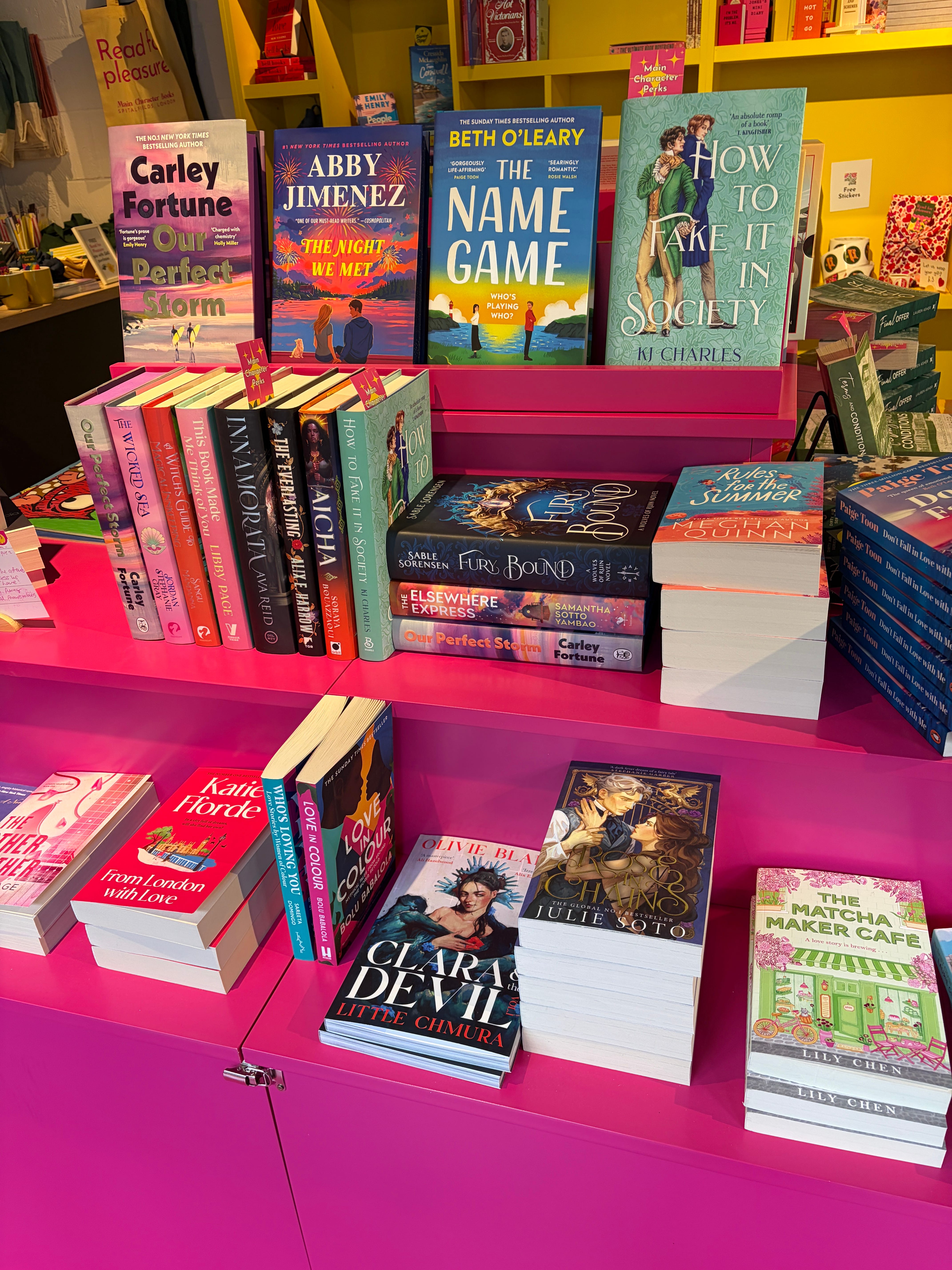
Hello, friends, and welcome back to Romancing the Phone, where we talk about reading and the ways it intersects with the internet. Conveniently, there are two big conversations about reading happening on the internet this week, with all kinds of BookTok offshoots. Plus - a film adaptation of Haunting Adeline is coming. Let’s dive in.
The Death of Reading
If you spent any time on the internet this week, you probably saw two articles, one from The Atlantic and one from the New York Times, talking about the death of reading in American culture. It is all incredibly depressing.
Per The Atlantic, more Americans placed a bet this year than read a book:
According to the National Endowment for the Arts, which conducts the most comprehensive survey of the nation’s reading habits, fewer than half of all adults reported having read a book of any kind in 2022. Only 38 percent read a novel or short story. A study analyzing 236,000 responses to the American Time Use Survey found that the proportion of Americans who read for pleasure on any given day fell from 28 percent in 2004 to 16 percent in 2023. (The study looked at people who had read a book, magazine, or newspaper; listened to an audiobook; or read an e-book.) Gambling has become a more common leisure activity than reading a book: Last year, 57 percent of Americans placed a bet.
Grim stuff. The time frame is interesting as well - at least on the BookTok side of things, we see 2020 as a watershed moment that brought many lapsed readers back to reading for pleasure. But that is clearly an outlier inside of the broader culture.
 Tiktok failed to load.
Enable 3rd party cookies or use another browser
Where this article and I diverge is when it starts to disparage the books that people actually are reading. Popular fiction is not a new concept. Nor is concern trolling over the substance of popular fiction.
 Tiktok failed to load.
Enable 3rd party cookies or use another browser
Is it a problem that students are more interested in reading graphic novels than chapter books? I don’t think so - we need to be providing more pathways into literacy, not less, and shaming readers for their choices isn’t the place to start.
 Tiktok failed to load.
Enable 3rd party cookies or use another browser
If you find this article from The Atlantic terrifying, David Wallace-Wells does a good job complicating its conclusions in the New York Times. Among other things, he points out that this decline in reading is actually being driven primarily by older Americans. But I still worry that we aren’t creating enough entry points for young readers to discover reading for pleasure, and it is true that attention spans are getting shorter.
How am I trying to combat this in my own life? Needlepoint, audiobooks, and less infinite scrolling.
I always want to resist the urge to over-simplify, so I do think it’s worth pointing out (again) that readers who do read are reading more books and that books are getting longer - not shorter. Which all complicates an argument about attention spans atrophying. But as The Atlantic points out, 20 percent of adults are reading 80 percent of all books read each year.
Now that being a reader is optional, it can function as an identity marker. When you see someone on the train reading printed matter, it feels like a statement. Perhaps inevitably, such statements have become the stuff of online ridicule: Brandish a book too ostentatiously in public, and you might find yourself accused of “performative reading.” The label presumes the person is only trying to telegraph that they are highly educated or possess superior literary taste—why else would they lug a book around?
Does this sound like BookTok or what? Which leads us to our next topic:
BookTok and the Art of Performative Reading
Coincidentally (or not), while these articles were being shared, another storm was brewing on BookTok: do book influencers actually read all of the books they claim to?
BookTok whiteboard queen Brit sums it up here (annoyingly this video won’t embed).
We’ve had this conversation before. Any time a reader (and it’s usually a woman) says she reads 100 books a year or 20 books a month, or shares some other metric about prolific reading, people descend on her to say that it can’t possibly be true. Or if it is, she isn’t reading the right kind of books. Or she isn’t spending enough time with her kids. Or clearly she doesn’t have kids or a full enough life. The list goes on and on.
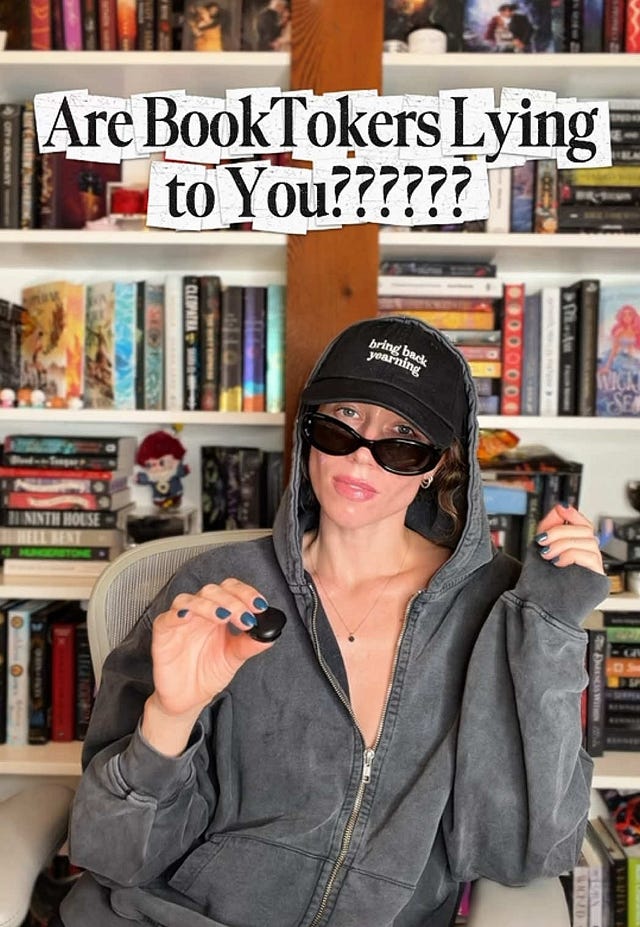
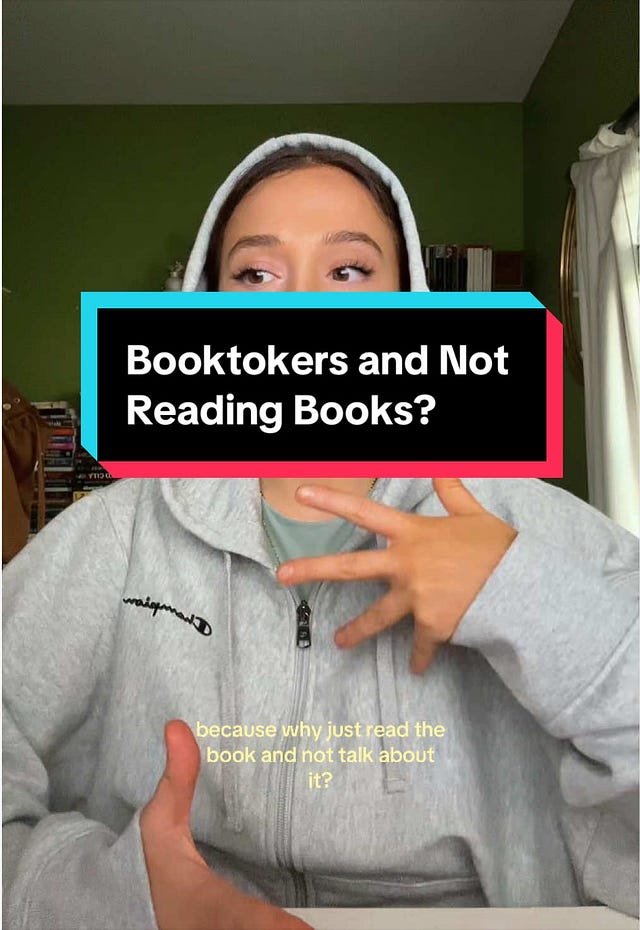
I couldn’t even find the reason this argument flared up again this week. Instead, what I found was dozens of book influencers insisting that they do in fact read the books they post about:
 Tiktok failed to load.
Enable 3rd party cookies or use another browser
 Tiktok failed to load.
Enable 3rd party cookies or use another browser
It’s interesting that both of these conversations involve a question about what counts as reading - I’m sure another round of does listening to an audiobook count as reading is next.
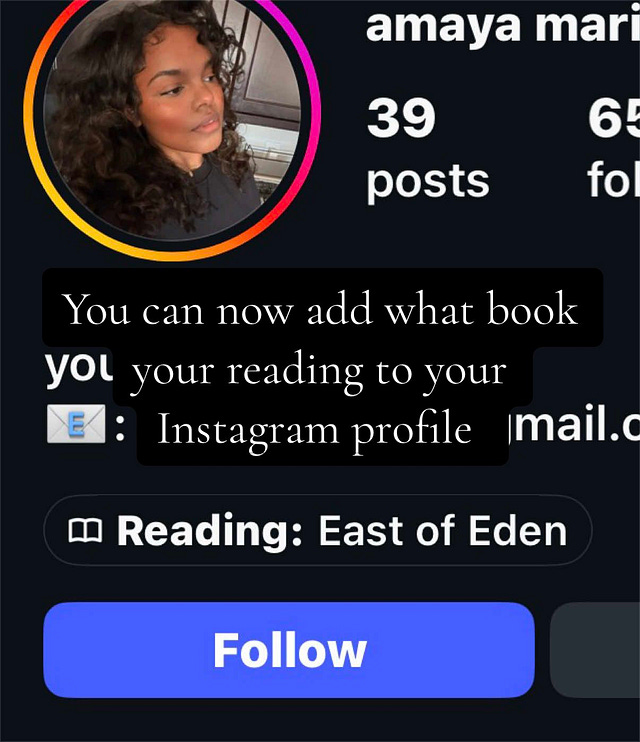
While all of this was happening, Instagram has now added a way to include the book you’re reading in your profile:
 Tiktok failed to load.
Enable 3rd party cookies or use another browser
Performative? A lot of what I see happening here, related to the decline in adult literacy or not, is reading/being a reader taking on the characteristics of fandom. Endless discourse cycles, in groups and out groups, merchandise, signaling - are we talking about books or the MCU?
And Finally…
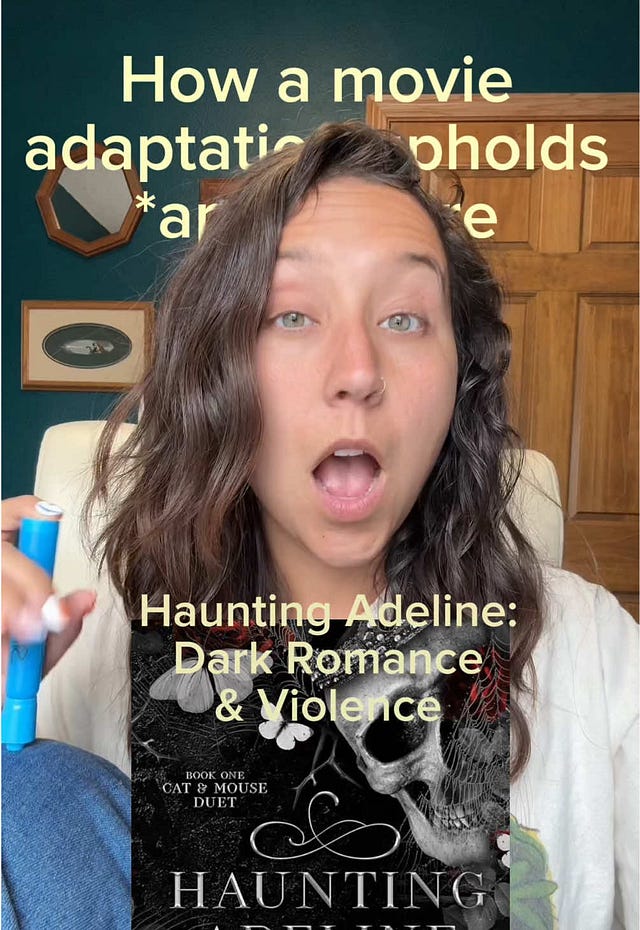
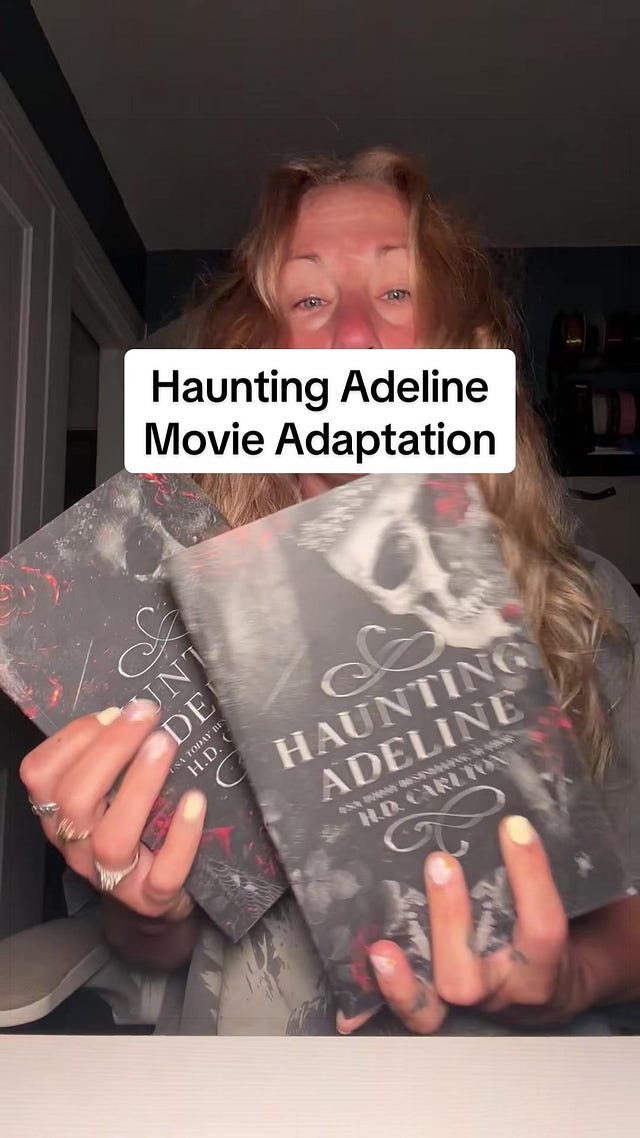
H.D. Carlton has confirmed that Haunting Adeline is being adapted for film (no confirmation of when or by whom) which has, repeat after me, generated discourse:
 Tiktok failed to load.
Enable 3rd party cookies or use another browser
 Tiktok failed to load.
Enable 3rd party cookies or use another browser
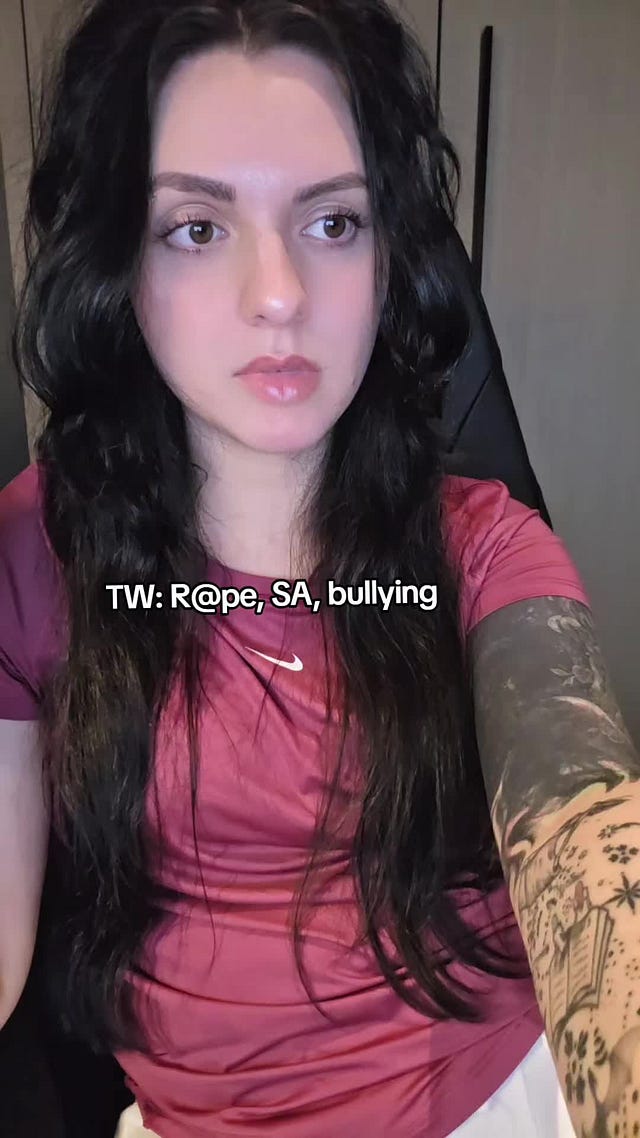
So much discourse that H.D. Carlton has posted a video apologizing to her readers that have gotten caught up in the discourse:
 Tiktok failed to load.
Enable 3rd party cookies or use another browser
I haven’t read Haunting Adeline (it is not for me and that’s fine) but from what I know about it, I can’t imagine how they are going to be able to make a movie. And I’m sure one of the things that producers see as valuable about this as IP is its ability to generate online outrage (and therefore awareness).
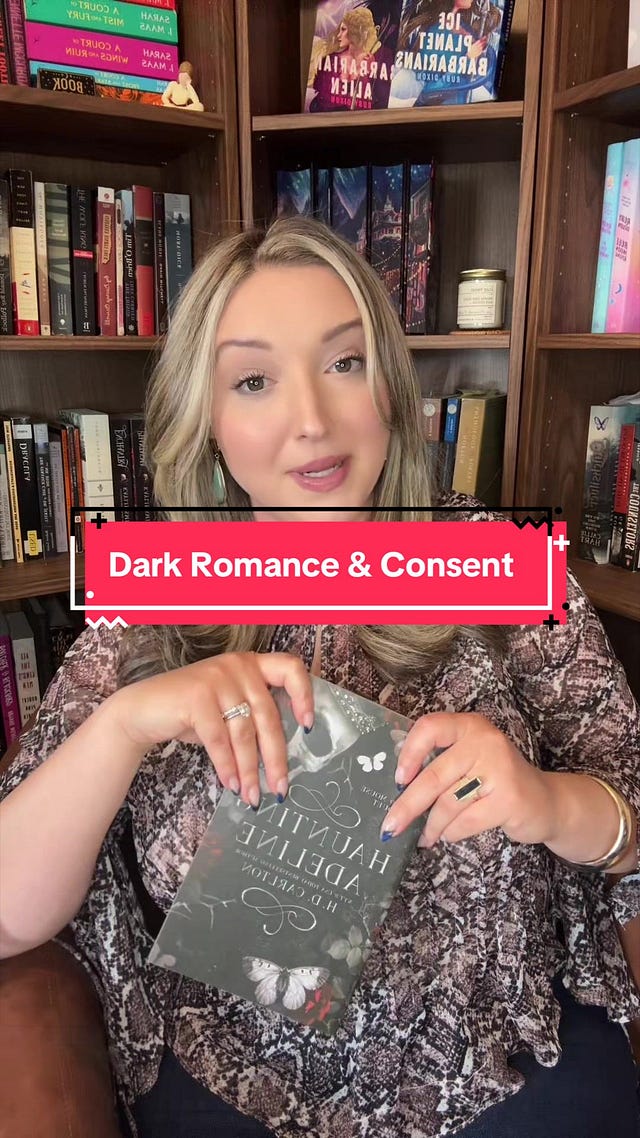
Another question that comes up over and over again when talking about books read by women online: can women differentiate fantasy from reality in their reading? I found Antoinette’s take interesting:
 Tiktok failed to load.
Enable 3rd party cookies or use another browser
I’ll be back soon to talk about what people are reading and how people are talking about books on the internet. In the meantime, what topics are you interested in seeing on RTP this fall? What books do you want to know more about? What are you reading and loving? Let me know in the comments.
My favorite high school English teacher had us read and analyze Sports Illustrated articles in the 90s because of the high quality of the writing. Magazines are reading. Graphic novels are reading. Audiobooks are reading. It's ALL reading. And you can find great writing in any format.
It drives me crazy that people think women can't distinguish fantasy from reality and that somehow dark romance is "worse" than any other fiction where bad things happen to people? No one ever says men shouldn't read books about war or The Godfather, but somehow there's always a moral panic when women enjoy "problematic" content.